
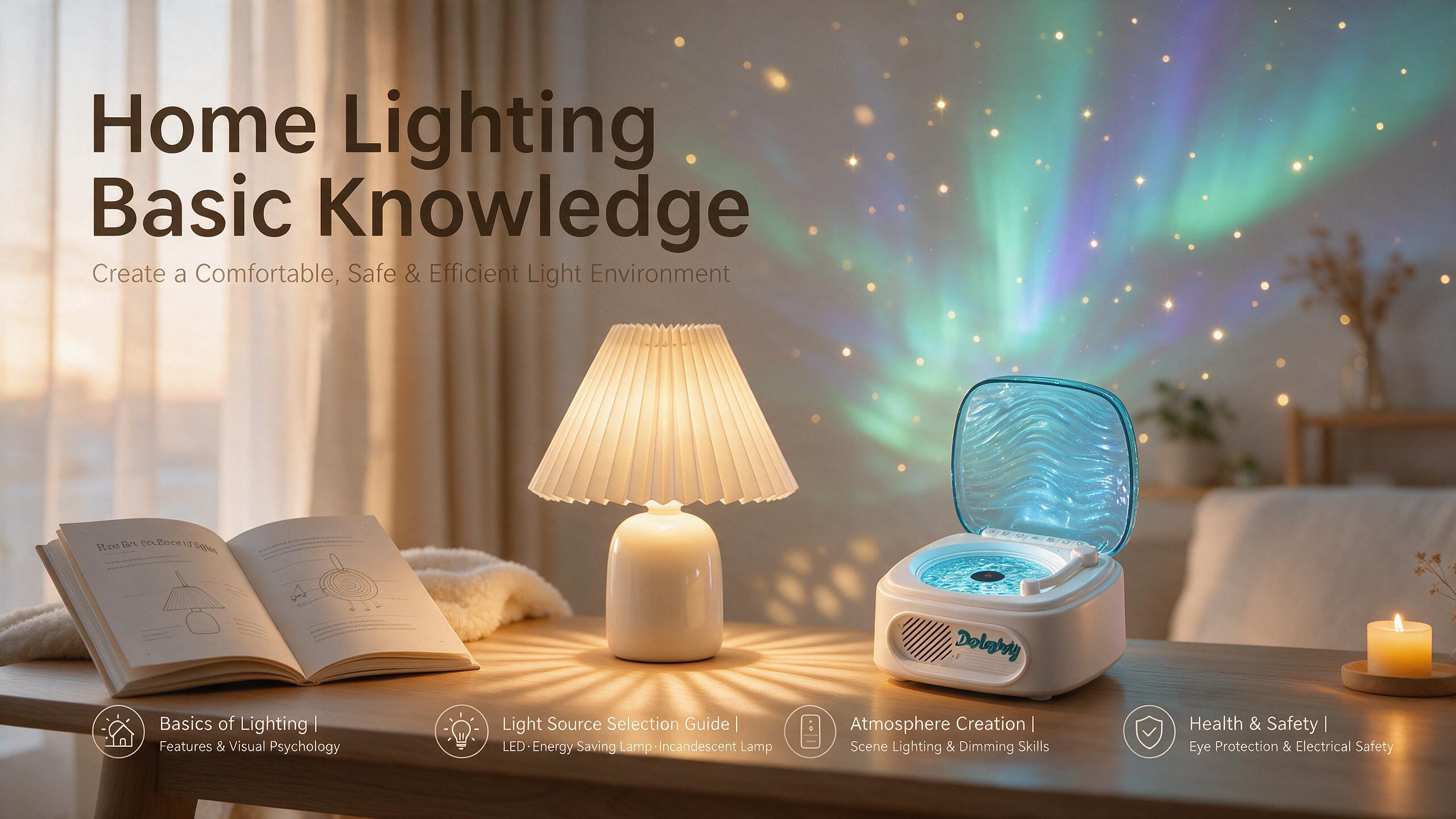
How to Create Different Lighting Scenes
Lighting has a powerful influence on how a room looks and feels......
RGB ambient table lamps and RGB projection lights are two versatile products that can be used to create different lighting environments throughout the home. With the right combination of colors, brightness levels, and lighting effects, the same room can feel relaxing in the evening, energetic during gaming, immersive during movie nights, or vibrant during a party.
Understanding how these products work in different environments can help consumers get much more value from their ambient lighting.
1. Create a Relaxing Bedroom Environment
The bedroom is one of the most common applications for ambient lighting.
An RGB ambient table lamp can be placed on a nightstand, bedside table, dresser, or shelf to provide a soft glow without overwhelming the room. Lower brightness levels and softer colors can create a more comfortable atmosphere during the evening.
Colors such as warm white, amber, soft red, purple, or other low-intensity tones can be used to create a relaxing visual environment.
An RGB projection light can take the experience further by projecting colored light onto a wall or ceiling. Instead of creating a small illuminated area, the projection can produce a broader and more immersive background effect.
For product manufacturers, bedroom lighting can be developed around specific preset scenes such as Relax, Bedtime, Reading, Romantic, and Night modes. This allows consumers to achieve a desired atmosphere without manually adjusting every lighting parameter.
2. Build a More Immersive Gaming Setup
Gaming environments require a very different lighting approach.
Gamers often prefer stronger colors, dynamic lighting, and synchronized effects that complement their monitors, keyboards, gaming PCs, and other RGB accessories.
An RGB ambient table lamp can be placed beside a monitor or at the rear of a gaming desk to provide colored background lighting. Blue, purple, red, cyan, and multi-color effects can create a more energetic gaming atmosphere.
RGB projection lights can expand this effect from the desk to the entire room. By projecting colored light onto walls and ceilings, they can create a more immersive environment around the player.
Music synchronization can make the experience even more interactive. When the lighting reacts to sound or music, the room can appear more dynamic and engaging.
For brands targeting the gaming market, combining RGB table lamps with RGB projection lights can create a complete gaming-lighting solution rather than selling each product as an isolated device.
3. Enhance the Home Theater Experience
Home theaters require careful control of ambient light.
Excessive brightness can distract viewers and reduce the impact of a large screen, while a completely dark room may not always be comfortable.
RGB ambient lights can provide subtle background illumination without competing with the screen. An RGB table lamp can be placed behind or beside the seating area, while an RGB projection light can create soft color effects on nearby walls.
In this application, lower brightness and smooth transitions are often more important than maximum output.
Dedicated lighting scenes such as Movie Mode, Cinema Mode, Relax Mode, and Background Light can make the product easier to use while creating a more consistent viewing environment.
4. Create a Dynamic Party and Holiday Atmosphere
RGB lighting is particularly effective for parties, birthdays, holidays, and entertainment events.
During a party, lighting can serve both decorative and entertainment purposes. An RGB ambient table lamp can provide colorful illumination on a table, shelf, or bar area, while an RGB projection light can transform the walls and ceiling into a larger visual background.
Music-reactive lighting can further increase the entertainment value by changing color, brightness, or movement according to the rhythm of the music.
Holiday-themed lighting scenes can also extend the usefulness of the same product throughout the year. For example, red and green combinations can be used for Christmas, while orange and purple can create a Halloween-inspired environment.
For brands, software-based lighting scenes provide an opportunity to add new seasonal experiences without changing the physical hardware.
5. Improve the Atmosphere of a Home Office
Ambient lighting is also becoming increasingly relevant in home offices.
An RGB ambient table lamp can be positioned beside a monitor or behind a computer screen to provide indirect background illumination. Rather than using strong direct light, the lamp can create a softer transition between the bright display and the surrounding room.
Different lighting scenes can be used throughout the day. A brighter neutral tone may be appropriate during focused work, while softer colors can help create a more relaxed environment after work.
This demonstrates an important characteristic of RGB lighting: RGB does not necessarily mean bright or flashy colors. The real advantage is flexibility. Users can choose different colors and brightness levels depending on the activity, time of day, and personal preference.
6. Combine Multiple Ambient Lights for a Complete Lighting Scene
One ambient light can change a small area, while multiple synchronized lights can transform an entire room.
For example, a bedroom could use an RGB ambient table lamp as localized bedside lighting while an RGB projection light creates a soft background effect across the wall or ceiling.
If both products can be controlled through the same smartphone app, users can synchronize colors, brightness, and lighting effects.
This approach also creates opportunities for brands to develop complete ambient lighting ecosystems. Instead of selling a single lamp, manufacturers can offer a range of coordinated products that work together.
Future ambient lighting systems may also connect with music, smart-home devices, sensors, and other environmental systems, allowing lighting scenes to respond automatically to time, sound, brightness, or user activity.
7. Ambient Lighting Is Becoming a Complete Spatial Experience
RGB ambient table lamps and RGB projection lights ultimately solve the same fundamental problem: creating a better visual environment.
Table lamps are generally more suitable for localized and close-range applications, while projection lights are designed to create larger-scale visual effects. Used together, they can cover bedrooms, living rooms, gaming rooms, home theaters, home offices, parties, and holiday environments.
For this reason, modern ambient lighting marketing should focus less on simply listing the number of colors or lighting modes and more on explaining what consumers can actually do with the product.
A strong ambient lighting product should help users answer a simple question: How can this light change my space?
That shift from product features to real-life experiences is becoming increasingly important in the modern lighting market.