
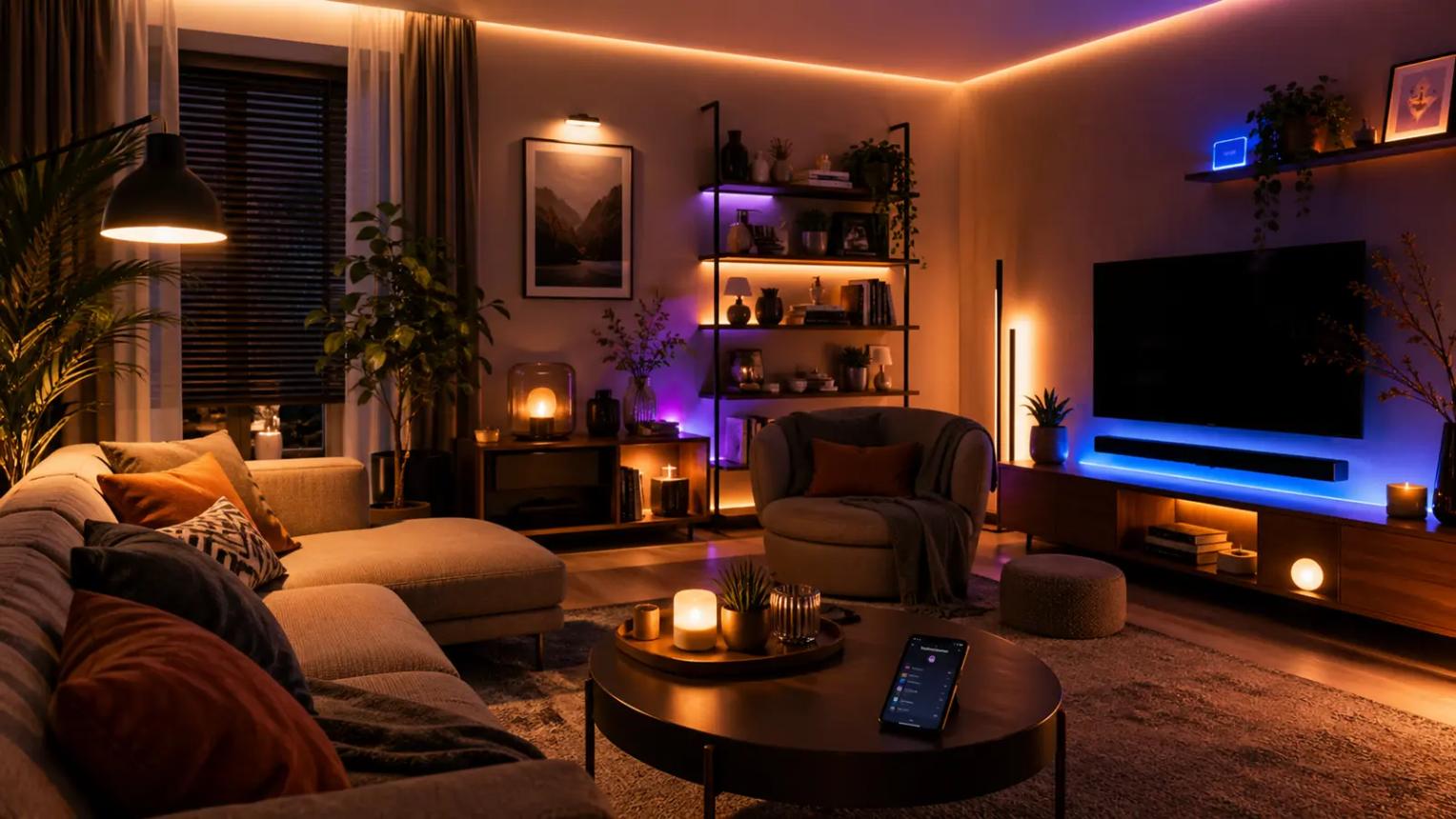
How to Choose an RGB Ambient Table Lamp or RGB Projection Light
Ambient lighting has become an increasingly popular part of modern home interiors......
A Complete Buying Guide
Ambient lighting has become an increasingly popular part of modern home interiors, gaming setups, bedrooms, home theaters, and entertainment spaces. Unlike traditional lighting, which is primarily designed to provide functional illumination, ambient lighting focuses on creating a specific atmosphere through color, brightness, light diffusion, and dynamic lighting effects.
Two popular products in this category are RGB ambient table lamps and RGB projection lights. Although they have different designs and lighting methods, both products share the same fundamental purpose: transforming an ordinary room into a more comfortable, personalized, and visually engaging environment.
When choosing between an RGB ambient lamp and an RGB projection light, consumers should look beyond appearance and price. Light quality, color performance, lighting effects, control options, application scenarios, thermal management, and overall product reliability all play an important role in determining the user experience.
1. Start With RGB Color and Lighting Performance
The value of an RGB ambient light is not simply its ability to change colors. What matters is how naturally and smoothly the product can create different colors and lighting effects.
A well-designed RGB lighting product should offer a wide range of colors and smooth transitions between them. Common lighting effects include gradual color changes, fading, breathing effects, color cycling, and dynamic transitions. Some products also feature music synchronization, allowing the lights to respond to music, sound, or the rhythm of an entertainment environment.
An RGB ambient table lamp typically creates a more localized lighting effect. It works particularly well on desks, bedside tables, shelves, nightstands, and other furniture. Because the light is concentrated within a smaller area, it is ideal for creating a personal lighting environment.
An RGB projection light works differently. Instead of simply illuminating the area around the lamp, it uses optical components to project colored light onto walls, ceilings, or other surfaces. This allows it to create a much larger visual effect and is especially suitable for immersive environments.
Although their lighting methods are different, both products rely on the same fundamental concept: using RGB color and dynamic lighting effects to change the mood and appearance of a space.
2. Choose the Right Product for Your Space
The intended application is one of the most important factors when choosing an ambient light.
An RGB ambient table lamp is a natural choice for bedrooms, nightstands, desks, gaming setups, home offices, living rooms, and small decorative spaces. Its compact design makes it easy to place and reposition without installation.
For example, a bedside RGB lamp can provide a soft, low-brightness glow in warm or relaxing colors during the evening. On a gaming desk, brighter colors such as blue, purple, or red can create a more energetic environment and complement other RGB gaming accessories.
An RGB projection light is generally better suited to larger visual spaces, including living rooms, bedrooms, gaming rooms, home theaters, parties, and holiday decorations. By projecting colored light onto walls or ceilings, it can change the appearance of an entire room rather than just a small area.
For this reason, RGB ambient table lamps and RGB projection lights should not necessarily be viewed as competing products. They can complement each other and create a complete ambient lighting setup, combining localized lighting with room-wide projection effects.
3. Smart Controls Are Becoming an Important Feature
Modern ambient lighting products are increasingly moving beyond traditional on/off switches. Depending on the product, users may be able to control lighting through buttons, remote controls, Bluetooth, Wi-Fi, or smartphone apps.
For consumers, the control method can have a major impact on convenience. A smartphone-controlled ambient light allows users to adjust color, brightness, lighting modes, and effects without physically reaching the lamp.
Bluetooth connectivity is particularly useful for personal and short-range applications, such as bedrooms, desks, and gaming setups. Wi-Fi connectivity can provide additional capabilities, including remote access, multi-device control, and smart-home integration.
Products that support voice assistants or smart-home platforms can take this one step further, allowing users to change lighting scenes using voice commands.
From a product development perspective, manufacturers can also use a common control platform across different RGB lighting products. The same underlying software and control architecture can potentially support ambient table lamps, projection lights, floor lamps, and other decorative lighting products, helping reduce development costs while creating a consistent product ecosystem.
4. Optical Design Matters for RGB Projection Lights
For RGB projection lights, the LED light source is only one part of the overall lighting system. Optical design plays an equally important role in determining the final visual effect.
Projection lights may use lenses, reflectors, diffusers, optical covers, or other components to control the direction and distribution of light. The optical structure affects projection distance, coverage area, brightness, beam shape, color blending, and edge transitions.
A well-designed optical system can create a smooth and visually balanced projection across a wall or ceiling. Poor optical design, on the other hand, may result in uneven brightness, limited coverage, harsh edges, or inconsistent color mixing.
For RGB ambient table lamps, light diffusion is generally more important. A well-designed diffuser can soften the direct LED output and reduce glare, creating a more comfortable appearance for close-range applications such as bedside or desktop use.
5. Consider Power Consumption, Heat Management, and Durability
Ambient lighting products are often used for extended periods, which makes thermal management an important part of product design.
The LED source, PCB, power supply, wireless modules, and other electronic components can all generate heat during operation. Manufacturers therefore need to consider the LED power level, PCB layout, enclosure design, materials, and internal airflow when designing the product.
For compact table lamps, the available internal space can be limited. If the product also includes Bluetooth, Wi-Fi, a microcontroller, battery management, or other electronics, thermal management becomes even more important.
Portable RGB ambient lights with built-in lithium batteries require additional attention to charging, discharging, battery protection, and USB Type-C power design.
For products intended for the U.S. and European markets, manufacturers should also identify the applicable regulatory and testing requirements based on the product's electrical design, wireless functionality, battery configuration, and intended market.
6. Choose Based on the Experience You Want to Create
The best RGB ambient light is not necessarily the brightest or the one with the largest number of lighting modes. The most important consideration is whether the product matches the user's intended environment.
For bedrooms, nightstands, desks, and gaming setups, an RGB ambient table lamp can provide convenient localized lighting. For larger rooms, home theaters, parties, gaming rooms, and immersive entertainment spaces, an RGB projection light can create a broader visual effect.
From a product and retail perspective, the two categories can also be developed as complementary products. A brand can offer ambient table lamps for personal spaces and RGB projection lights for room-wide effects, creating a broader ambient lighting product range.
Ultimately, RGB ambient lighting is about more than illumination. It is about giving users an easy way to change the mood, character, and visual experience of a space.